Boost Sales Now: Artificial Intelligence in Sales
Unlocking Potential: Artificial Intelligence in Sales Today

Key Highlights
-
Artificial intelligence is changing the sales process. It does this by automating work and giving strong insights.
-
The use of AI tools helps a lot with sales productivity and makes things run better.
-
AI helps customer engagement by making it easy to have personal talks with lots of people at once.
-
When you put AI and CRM systems together, you get great data analysis and lead scoring options.
-
Generative AI brings new ways to make content and to reach out to customers in smart ways.
-
Machine learning helps with sales forecasting. It makes predictions more accurate and helps people make good choices.
Introduction
Artificial intelligence is not just something for the future. It is now a strong tool that is changing how sales teams work. When sales reps use artificial intelligence in their daily jobs, they do not have to spend as much time on manual tasks. This lets them spend more time building relationships and closing deals. The technology helps them work smarter, not harder. It makes the whole sales funnel run better and gives sales teams an edge in a fast-moving market.
Defining Artificial Intelligence in Sales
 Artificial intelligence in the sales process means using ai technology to help the sales team do their job better and faster. It is about using ai tools that let you find good leads, talk to people who might buy from you, and close deals more quickly. The use of ai is now very important for high-performing groups.
These days, artificial intelligence helps in the sales process in many ways. It can do data entry on its own and can study customer interactions. This means sales professionals spend less time on jobs like paperwork and more time talking with potential customers. When you use ai this way, it helps move prospects through the sales funnel faster.
Core Concepts of AI in Sales Operations
AI technology in sales operations helps people do their jobs better. It does not replace them. The idea is to use machine learning and data analysis to make the sales process smoother. With this help, your team can spend less time on small jobs and more time on important work.
Sales automation is one main way this happens. AI tools can take care of many boring and repetitive tasks during the day. One example is manual data entry in CRM systems, which is not only slow but often has mistakes.
When AI takes care of these routine tasks, it gives back a lot of time. Sales reps can use that time to build customer relationships or work on bigger sales plans. So, their work flows better, and the whole team can get more done.
Types of AI in Sales—From Predictive to Generative
The world of sales AI has a few main kinds of tools. Every tool has something good to offer. You can use them in your sales strategy to fix some problems and find new ways to grow and work better.
One important tool is predictive analytics. It uses customer data from the past and machine learning to guess what might happen next. This helps you see which leads are most likely to become buyers. Generative AI is another helpful tool. It can make new content like emails and sales pitches that are made just for each person.
These tools are based on some main ideas in AI:
-
Machine Learning (ML): This lets systems learn from data, so they get better at making choices over time. You do not need to tell them every step.
-
Conversational AI: This lets you talk to customers in a way that feels real. It uses natural language processing to make chatbots and assistants act like people.
-
Agentic AI: This kind can make decisions and take action on its own. It needs little human intervention. It helps make your sales workflow smoother.
KeyTerms and Language Used in AI Sales
Some words you need to know in the world of artificial intelligence in sales are Sales Intelligence and Sales Enablement. These help you make your sales strategy more efficient and work better. Databahn gives the kind of insights about customer behavior that help you with lead qualification and keeping good customer relationships over time.
There are also terms like Account Based Selling and Account Based Marketing. Many big companies like those in the Fortune 500 and Global 2000 now use these ideas. They show it is good to focus on what a customer or group of customers really need. Knowing these words helps sales professionals. It lets them improve the way they work and keep up with market trends. It also helps them better understand what their customers need.
Real-World AI Applications Transforming Sales
 The benefits of ai can be seen when you look at how people use it in daily work. In different fields, sales professionals now use ai technology to change the way they handle customer interactions and their results. These use cases show quick value for any team working in sales.
Ai helps with things like making call summaries and sending messages that fit each person, even when talking to many people. This makes the work easier. Sales reps get clear ideas from this, and they can spend more time building relationships. The use cases below will show how ai is being used to boost sales outcomes now.
Predictive Lead Scoring
One big use of AI in sales is lead scoring with predictive analytics. This goes past old, slow methods to sort potential leads using real data about how likely they are to buy. The goal is to give your team clear advice on where to put their effort.
The AI system looks at vast amounts of data. It checks things like customer behavior, who people are, what they do on your site, and past talks you have had with them. The AI finds patterns that match with good sales and gives each person a score. That shows how ready they might be to buy.
This automated way helps sales reps spend their time on the most promising leads. No more guessing about who to call or email next. Your team can look at those who are the best bet to become customers. This leads to better conversion rates and boosts sales efficiency for everyone.
Personalized Customer Interactions and Segmentation
AI lets you make customer interactions more personal than ever before. You get to look at customer data to find out what each person likes, what they bought before, and how they act. This helps you speak to them in a way that fits them best.
With this kind of deep understanding, you can split your customers into smaller groups. You do not have to do big, general marketing anymore. Now, you can make groups based on really detailed things. This makes sure your messages always feel right for the person getting them. Because of that, customer engagement gets better, and your connection with them grows stronger.
There are many ways you can use AI-driven personalization, like:
-
Tailored product recommendations based on what a customer bought before.
-
Creating email content that talks about the customer's real problems.
-
Changing offers on the spot, depending on where someone is in the buying process.
AI-Powered Sales Chatbots and Virtual Assistants
AI agents like sales chatbots and virtual assistants are now key in the sales process and customer service. These tools work day and night. They help people right away and let human workers focus on harder problems.
These smart bots answer questions that come up a lot. They share product details and help set up meetings. They can also show website visitors the steps to start the sales process. This makes sure no lead slips by. Customers can get help whenever they want, so no need goes unmet.
With natural language processing, talking to these bots feels more like talking to a real person. This helps your team do lead generation and gives website visitors a better time. Companies use these bots to work better and faster, not taking on more staff. It turns website visitors into potential customers.
Popular AI Tools Accelerating Sales Teams
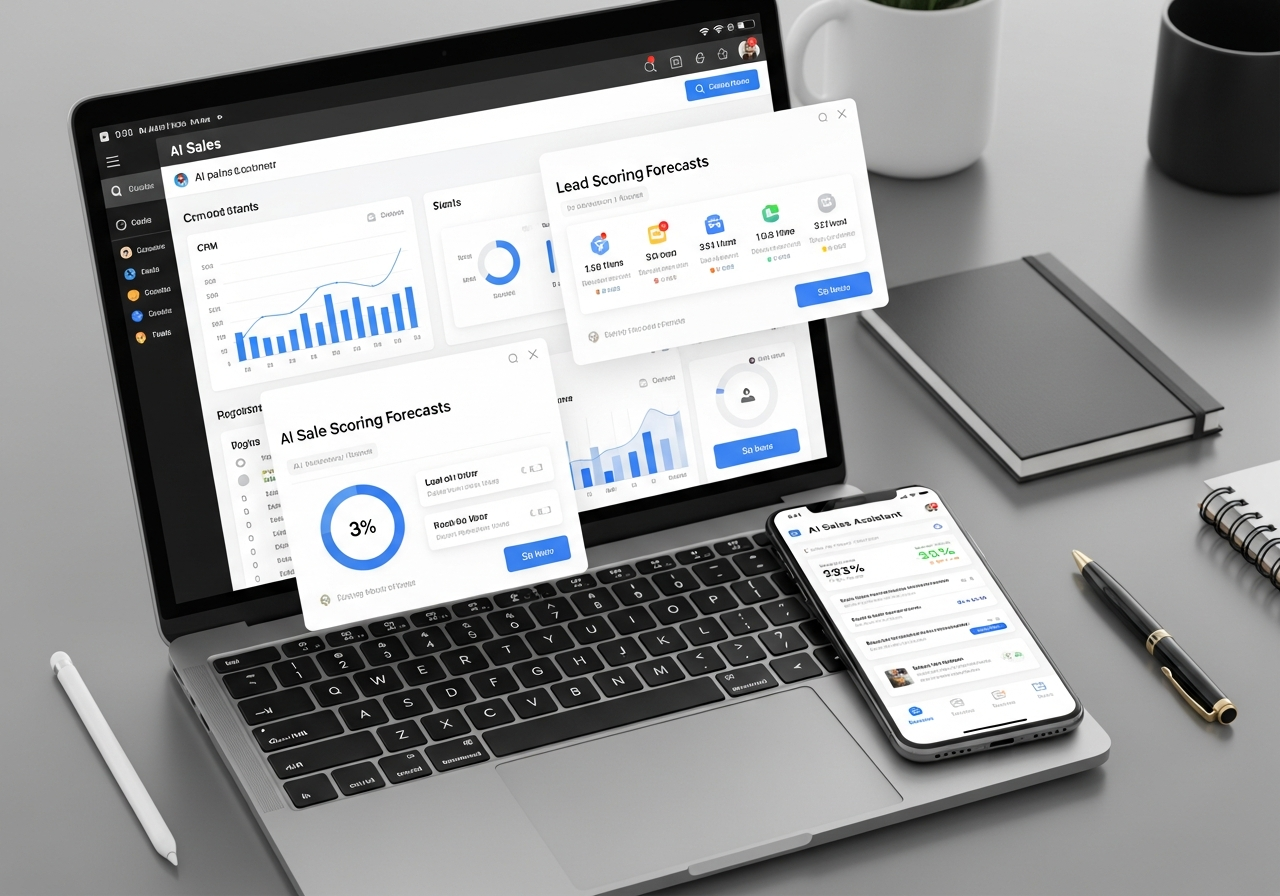 There are now many new ai tools that can help sales professionals boost sales and be more productive. These platforms can fit easily into what you already do every day. They help with lead generation and also help with how you keep up with customers. Knowing what kinds of tools are out there is the first step if you want your work in sales to get smarter.
Some tools use generative ai to make content. Others use smart ways to listen to and study sales calls, which is called conversational intelligence. These tools can help with problems that come up during the sales process. The most used ai tools are the ones that can do boring jobs for you and give you information that you can use right away. In the end, they help people work faster and get better results. That helps with sales efficiency and will boost sales.
Generative AI Platforms for Sales Enablement
Generative AI platforms are a game-changer for sales enablement. These tools empower sales reps by automatically creating personalized content for every stage of the sales cycle. This includes drafting compelling emails, building custom sales pitches, and even generating relevant case studies on the fly.
By using generative AI, your team can produce high-quality, tailored materials in a fraction of the time it would take manually. This allows them to respond to prospects faster and with more relevant information, significantly increasing their effectiveness. This technology serves as a real-time copilot for sales professionals.
Here is how generative AI supports different sales enablement activities:
|
Content Type |
How Generative AI Helps |
|---|---|
|
Sales Emails |
Creates personalized outreach and follow-up messages at scale. |
|
Sales Presentations |
Generates custom slides and talking points for specific prospects. |
|
Blog & Social Posts |
Drafts content from source material like white papers to warm leads. |
|
Proposals |
Assembles tailored proposals based on customer needs and data. |
Conversational Intelligence Solutions
Conversational intelligence solutions use AI to check customer interactions on many channels, like sales calls, emails, and social media. These platforms write out what is said, sum up talks, and pick out key moments from every chat. This gives your team important insights.
Sales reps do not have to take notes by hand. They can stay focused on talking with the customer because the AI gets all the key details. After a call, the system can make a quick summary, point out next steps, and show any customer pain points or strong signals to buy.
This technology helps make coaching better, update sales strategies, and give a higher level of customer satisfaction. When sales leaders know what helps and what does not in real-life talks, they can give more useful feedback. This helps everyone on the team do better.
Revenue Intelligence Systems
Revenue intelligence systems use AI and pull data from your CRM systems and other sales tools. This gives you a clear look at your sales pipeline and what is happening in your sales process. These platforms do more than basic reports. They give you real-time insights and forecasts to help drive revenue growth.
When they check all your sales data, these systems can spot risks and find opportunities in your sales pipeline. They keep track of how your team is doing with their goals and also give sales forecasts you can trust. This makes it easier for sales leaders to see how well the business is doing and to use the right data to make choices that guide the team forward.
In the end, revenue intelligence lets your team work in a smarter way and plan ahead. It links what your sales team does each day with the money your business brings in. This helps everyone in your team stay focused on growing the business and reaching steady goals.
Generative AI’s Impact on Sales Strategies
 Generative AI is changing the way people handle the sales process. It brings more to how sales strategy works by adding new tools for automation and personal touch. With generative ai, sales teams can make content that fits each person. They can do this fast and for many at the same time. This can be for emails to get new lead generation or for follow-up with more details. It is like having a smart helper by your side that lets each sales pro do more.
This has a big effect on how fast and well they work. With generative AI sales tools, reps spend less time making content. They get to focus more on building real bonds and selling in a smart way. It helps change the way companies look at the sales process from start to finish.
Automated Content Creation and Custom Presentations
One of the best things about generative AI is how it helps with automated content creation. With this tech, you can quickly make many kinds of sales materials. This makes it easy for your team to talk to people with the right, high-quality content, without spending a lot of time doing the work by hand.
You can use generative AI to turn one item, like a white paper, into blog posts, social media updates, and more. It takes your message and puts it into the format that works best for each group of people. This helps you keep your message the same, but also makes it fit each way you talk to others. Being able to do this is very important for having good and effective sales at a big scale.
Generative AI can help you make:
-
Custom Sales Presentations: The system gives you slides and things to say that talk about customer needs and pain points from your CRM.
-
Personalized Proposals: It writes messages that show the value points that work best for each prospect.
-
Follow-Up Emails: It gives you messages you can send after a meeting, and these notes include key ideas from the last time you spoke.
Using generative AI is a good way to save time, reach people on social media, and work well with every customer. It helps you do your work faster and makes sure your message always matters to the person reading it.
Intelligent Outreach and Follow-Up Automation
Generative AI is changing how outreach automation works. It makes things smarter and more personal for you and your sales reps. Instead of sending out the same message every time, AI can write emails that fit each person. It looks at their profile, the industry they are in, and any previous interactions they had with your company.
This kind of personalized outreach helps build better customer relationships from the start. The AI can also handle follow-up messages. It knows the right time to reach out and keeps the messages about things that matter to the prospect. That way, people stay interested and can move along in your sales funnel. The AI can even let you know the next steps to take so you can work toward future sales.
By taking care of these important but time-consuming jobs, smart outreach automation helps your sales reps deal with more leads at the same time. It makes sure you stay in touch with everyone and keeps things on track. This makes it more likely you will turn leads into loyal customers.
Customizing the Customer Journey with Generative AI
Generative AI lets you shape the customer journey in ways that were not possible before. It looks at their purchase history, what they search for, and all past talks to understand them. The AI can then make a special and changing experience for each person.
This kind of deep personalization does more than simple product ideas. Generative AI can change every step, from the first ad a person sees, all the way to the help they get after buying. Every single part can be renewed so it matches what that person likes and needs.
The result is a smooth and very important journey that makes customers feel seen and valued. When you let the AI update the journey at each step, you raise the odds of them picking you. You also build a good link with them, which can lead to repeat business and people speaking well of your brand.
Machine Learning for Sales Forecasting
 Machine learning helps with sales forecasting by looking at historical data. It finds complex patterns in the data that people might not see. This technology does more than just simple trends. It can give very accurate and real-time sales predictions. By using predictive analytics, a company can make better targets and use its people and resources in a smarter way.
When you use this kind of data-focused process, sales leaders can spot changes in the market sooner. They also get a clear idea about how the sales pipeline is doing and can make smarter choices for the business. The next parts talk about how machine learning gathers data, makes forecasts more reliable, and helps turn data into actions you can use.
Data Collection and Pattern Recognition
The base of good and correct machine learning forecasting is strong data collection. AI systems get a lot of sales data from many places. This can be your CRM, your sales records, or news about market trends from outside. The AI needs this full and wide collection of data so it has everything to use.
After the data is there, the machine learning model is great at seeing patterns. It looks through the data to find small links and things that can change how your sales go. For example, it may notice some of your customers do something before they buy. This could point to a rise in your conversion rates. The model may also see that you have some sales patterns every season or during a certain time of the year.
This power to see hard-to-catch patterns in a huge pile of data is what makes AI-powered forecasting different. It gives you a stronger picture of what drives your sales performance. This way, you get more clear and trustworthy forecasts to help you plan ahead.
Improving Accuracy with Machine Learning Models
Machine learning models help sales forecasting get a lot better — much more than old ways of doing it. These models are built to learn and change as they look at more data. The more data they see, the better their guesses become. They can also work with huge amounts of data from many places.
Machine learning models do more than just look at past sales data. They also study real-time sales data and watch the market and customer habits as things happen. This helps them spot things like when busy times change, when the economy moves one way or the other, and when there are new trends, things that old methods may miss.
Because of this, you get a sales forecast that's not just closer to the truth, but can also handle shifts and surprises. As the models get new data and update their way of working, they give sales leaders a forecast they can trust for planning and using resources the right way.
Supporting Decision-Making with Predictive Insights
The main aim of machine learning in sales is to help you make better choices. These models show predictive insights that let sales leaders be proactive and think ahead when working with their teams and sales pipeline.
You do not have to wait and act after seeing poor past results. With these insights, you can look ahead and change your sales strategy before problems come up. For example, if the model shows there could be less sales in one region, you can move your resources or start a new campaign there to help fix that.
Predictive insights make it easier to:
-
Set the right sales quotas for each area.
-
See which deals in the sales pipeline may be in trouble.
-
Decide where to use marketing and sales resources for the best results.
With machine learning, you can improve your sales pipeline and get better with your sales strategy.
Benefits of Artificial Intelligence for Sales Teams
AI brings many key benefits to sales teams. It helps them work better and get more done. One big advantage is that AI can handle routine tasks. This means sales professionals have more time for important work. They can build good customer interactions and focus on closing deals. Because of this, sales productivity increases.
AI also gives sales teams new insights based on data. They can use these insights to improve how they connect with people. Personal touch in customer interactions leads to higher customer satisfaction. When customers feel heard, they engage more.
In the next parts, we will talk about even more benefits. This includes how sales professionals see better customer engagement, improved sales productivity, and sales processes that flow well.
Increased Productivity and Efficiency
One of the best benefits of AI in sales is that it can help people work faster and better. AI can handle many routine tasks that take up a lot of a sales rep’s time. This means your team has more time to focus on talking to people and selling.
AI can take care of many of these jobs, like manual data entry into your CRM and setting up follow-up meetings. When you use AI for these tasks, the team does not have to do these jobs by hand. This helps your team avoid mistakes and keeps the data clean and correct.
Here are some key routine tasks that AI can do for better work:
-
Data Entry: AI can update your CRM with all the important info from calls and emails.
-
Meeting Scheduling: AI finds times when everyone can meet and sends out invites.
-
Report Generation: It makes reports and dashboards for you.
With the benefits of AI, teams do fewer repetitive jobs and get more done.
Enhanced Customer Engagement and Retention
AI helps a lot with customer engagement. It does this by looking at customer behavior and what they like. This makes it easy for your sales team to have chats with people that feel special to them.
Building relationships is easier because of this personalization. When customers see that you get what they need and give them things that fit, they often want to stay with you. AI also checks previous interactions to show what to do next, so that every talk is useful.
This kind of work makes customers feel that you know them and care about what they want. When you always give them a good and personal experience, they are less likely to leave. This means your base of repeat customers grows strong over time.
Better Sales Process Optimization
Adding AI to the sales process is a good way to make things run better. AI can look at lots of crm data and sales actions. It will help find what slows things down and what needs to get fixed in your work.
With this information, you can make the sales process more effective. For example, AI may show that leads from a channel have higher conversion rates. You can put more money and time into that channel. It can show you which steps in the sales funnel make people drop out at the highest level.
When you keep using this data and AI, you keep making the sales process better. This helps make a more effective sales system. When data is used, you can get a higher conversion rate, close more deals faster, and help your business have stronger revenue growth.
Overcoming Challenges When Implementing AI in Sales
The benefits of AI tools are easy to see. Still, many companies run into some problems when they try to use them. Some of the main issues are problems with data quality, the need to train the team, and worries about following the right rules. To get the most out of AI tools, companies need to find ways to get past these problems.
To solve these issues, companies have to be smart about what they do. They need to clean up their data. They also have to help their team deal with change. On top of that, they must set clear guidelines on how things should be done. The sections below show ways to handle these common problems when using AI tools.
Addressing Data Quality and Integration
One of the main reasons AI projects fail is bad data. AI tools can only work with what you give them. If your sales data is not complete, has errors, or does not match in all the places it lives, what you get back from AI will not be right.
Before you bring in AI, you have to check your data in your CRM systems and other lists. You need to get rid of double records, fill in data that is missing, and make sure that all your data looks the same. This first step is the key to making sure your AI plan works.
It is also important to make sure all your systems connect the right way. Your AI tools need to pull data from your CRM, your marketing program, and any other place where you keep sales data, without any roadblocks. When your systems are joined in this way, you will have one clear view of your numbers. That will help your AI give you results you can trust.
Change Management and Team Training
When you bring new technology into your business, like AI tools, you need to change the way people think and work. Your sales team may not like the change at first. Good change management can help your sales professionals accept the new tools instead of pushing them away. It helps if you explain the vision and show the benefits from the start.
You must train your sales team well. They need to know how to use the AI tools each day. They should also learn how to look at data analysis and what to do with the results. Training is not a one-time thing. You should do training often to keep up as AI tools and what they can do change over time.
Key parts of a good training plan are:
-
Running workshops where your team can use the new AI platform themselves.
-
Showing the team why using data analysis and making decisions with facts is helpful.
-
Making the guidelines clear about how AI will support their jobs, not take their place.
Ethical Considerations and Compliance
When you use AI, you need to think about the right way to use it and the rules for working with customer data. You can build trust in your sales process by being open about what you do with customer data and showing that you keep it safe. This is an important part of using AI in a way that is right and fair.
Make sure you set up easy-to-understand rules that show how AI should work and what customer data it can get into. It is also key to follow rules like GDPR and CCPA. This can help you avoid problems with the law and protect your good name. Get your legal and IT teams to help make these rules strong.
There should also be a good mix of automation and people involved. AI can do a lot of what you need, but people should still watch over big choices. This keeps things honest and brings in careful thinking that a computer might not have. People who use your sales process will trust it more if they know there is human intervention.
In Summary
To sum up, using artificial intelligence in sales is more than a new thing. It changes the way companies connect with their customers. AI helps with lead scoring and makes customer interactions personal. This lets sales teams work better and speed up their work. Still, to do this well, you have to handle problems like having good data and teaching the team how to use it. As AI grows, you need to keep learning and change your sales strategy to stay ahead of others. If you want to boost your sales strategy with artificial intelligence, get a free talk with our experts today.
Frequently Asked Questions
What skills do sales reps need to thrive with AI tools?
To do well with AI tools, sales reps need to know how to look at data and see what it means through CRM systems. The technology can take care of simple tasks, but sales reps should be good at solving tough problems and building relationships. With the help of AI-driven information, they can talk to people in a way that means more.
How will AI in sales evolve by 2026?
By 2026, AI technology in sales will do more work on its own. The use of AI will play a bigger part in helping people make predictions and watch over the sales pipeline. People will not just use AI as a tool to help them. It will be a core part of their daily work for future sales success.
What are the main obstacles companies face when adopting AI-powered sales solutions?
The main problems are bad data quality because of manual data entry, sales professionals who do not want to change, and the need to follow rules the right way. If companies want to get all the benefits of AI tools for their sales, they will need to fix these issues.
Sources:
https://www.gartner.com/en/documents/3875220/magic-quadrant-for-the-crm-customer-engagement-center
https://www.marketsandmarkets.com/
https://aimagazine.com/top10/10-ways-ai-can-used-homes
https://www.wsj.com/articles/how-ai-can-help-save-forests-11604430000
https://www2.deloitte.com/us/en/pages/consulting/articles/state-of-ai-2022.html